
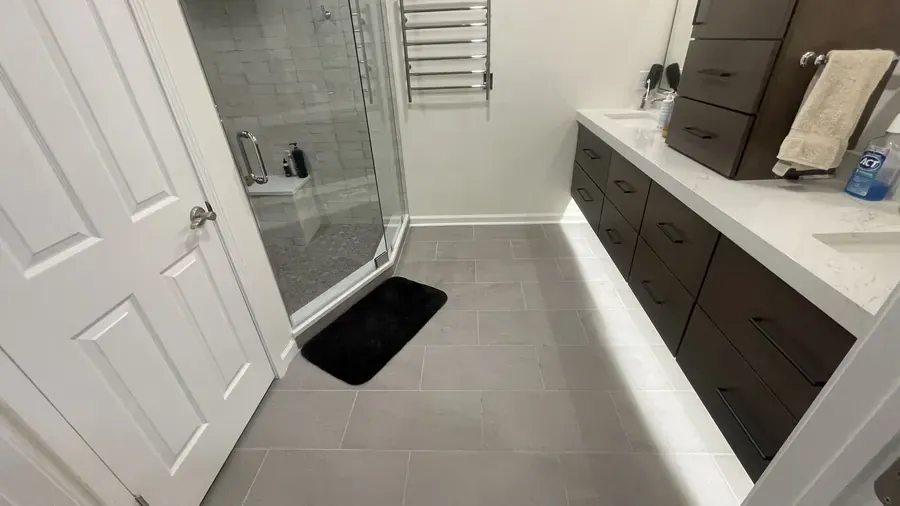
Bathroom guide
Tub-to-Shower Conversion: What to Expect
A tub-to-shower conversion replaces an old bathtub with a walk-in shower that is easier to step into and simpler to clean. This guide explains who it suits, how the work is done step by step, and the choices you make along the way.
- 10+ Years of Experience
- Fully Insured
- Google Guaranteed
- Free In-Home Estimate
- 1-Year Warranty
- Credit Cards Accepted
Who it suits
Is a Tub-to-Shower Conversion Right for You?
A conversion makes the most sense when the tub is rarely used for baths. Walk-in showers are the most requested bathroom upgrade, because they are easier and safer to step into, feel more open, and are simpler to clean. If the home has another tub for children or guests, converting one bathroom is usually an easy decision.
- The tub is used mostly as a shower
- Stepping over the tub wall is hard for someone in the home
- You want a larger, more open shower
- There is at least one other tub in the house
The process
How the Conversion Works, Step by Step
Most conversions follow the same order, and the parts you never see matter most. The old tub comes out, the plumbing is adjusted for the new shower, and the walls and pan are waterproofed before any tile goes in. Skipping or rushing waterproofing is a common reason showers leak behind the tile years later.
- 1
Removal
We protect the house, remove the tub and old wall surfaces, and check the framing and subfloor for water damage.
- 2
Plumbing and Base
The drain and valve are adjusted for the shower, and the shower pan or base is set with the correct slope.
- 3
Waterproofing
Shower walls, the pan, and wet areas are waterproofed before any tile is installed.
- 4
Tile and Glass
Tile, niches, and fixtures go in, the grout is sealed, and the glass enclosure is installed last.
Options
Choices to Make for Your New Shower
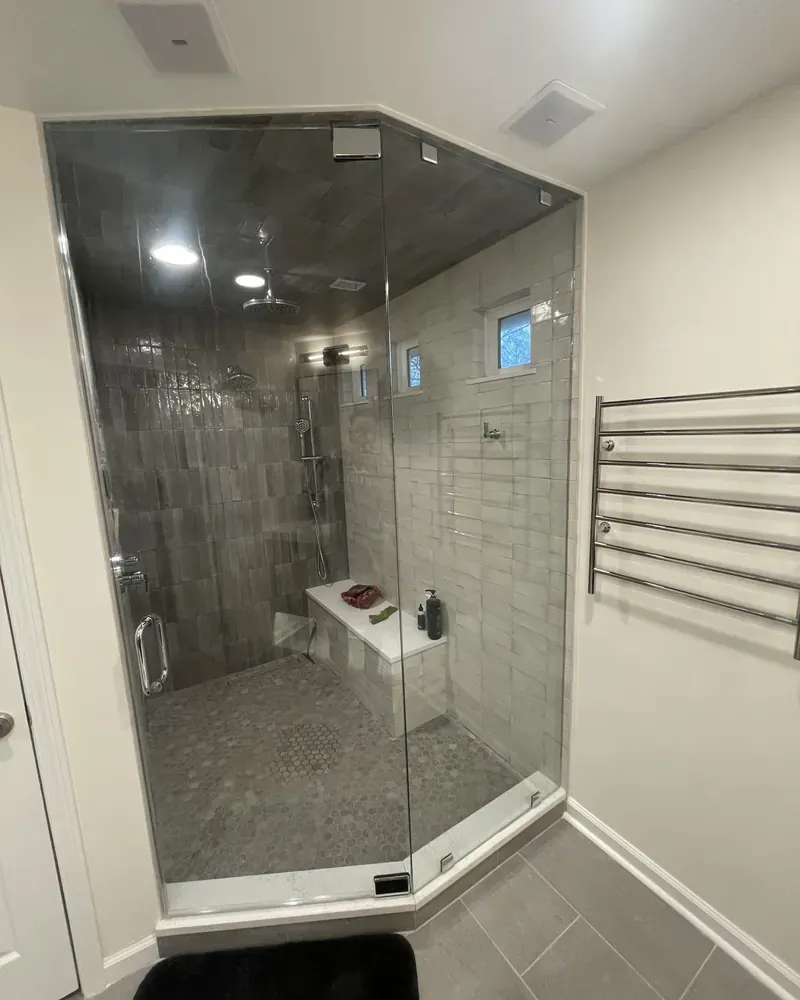
The new shower can be as simple or as detailed as you like. The main choices are the type of base, the tile for the walls and floor, the glass enclosure, the fixtures, and storage such as a built-in niche or bench. Each one changes the look of the bathroom, and some also change the price.
| Choice | Options |
|---|---|
| Shower base | A tiled shower pan, a prebuilt shower base, or a curbless entry |
| Walls | Tile from floor to ceiling, or a shower unit |
| Glass | A glass door, a fixed glass panel, or a full glass enclosure |
| Fixtures | Shower head, handheld shower head, and matching valve trim |
| Storage and safety | A built-in niche, a bench, grab bars, and slip-resistant floor tile |
Price factors
What Affects the Price of a Conversion
The price of a tub-to-shower conversion depends on the size of the shower, the materials, and what is found once the tub comes out. A shower unit costs less than a fully tiled shower, and frameless glass costs more than a framed door. Hidden water damage or rot under the tub also adds repair work.
Free estimate
Plan Your Tub-to-Shower Conversion
Our team can look at the bathroom during a free in-home estimate, check the space and the plumbing, and help you choose the base, the tile, and the glass. You receive a written, no-obligation proposal with the scope, the schedule, and the price for your conversion. You can also call (470) 712-5294.
- 10+ Years of Experience
- Fully Insured
- Google Guaranteed
- Free In-Home Estimate
- 1-Year Warranty
- Credit Cards Accepted
FAQ
Questions About Tub-to-Shower Conversions
These answers cover the questions homeowners ask most often before they replace a bathtub with a walk-in shower. If your bathroom has a layout or a problem that is not covered here, call (470) 712-5294 or send the form, and our team will explain the options for your space in plain language.
Should I keep at least one bathtub in the house?
In most homes, yes. Families with young children often want a tub, and some buyers look for at least one. If the house has another bathroom with a tub, converting the master or a secondary bath to a walk-in shower is usually a safe choice. If it is the only tub, we talk through the trade-off with you first.
Can a conversion make the bathroom safer?
Yes. Removing the tub wall means no more stepping over a high edge, and the new shower can include a low or curbless entry, grab bars, a bench, a handheld shower head, and slip-resistant floor tile. These details make the bathroom safer for older family members or anyone with limited mobility.
Do you check for water damage under the old tub?
Yes. Once the tub and the old wall surfaces are out, we inspect the framing and the subfloor for water damage, rot, or mold. If we find a problem, we show it to you and explain the repair before continuing, because a new shower should only be built on a solid, dry base.